
The short answer: check the vent first
When a dryer that used to finish a load in one cycle starts needing two or three, the problem is usually not the dryer itself. Most of the time it is the vent, the duct that carries hot, damp air from the back of the dryer to the outside of your home.
A dryer works by pushing moist air out. If lint builds up in the vent, or the duct is crushed, kinked or too long, that air has nowhere to go. The moisture stays in the drum, the clothes stay damp, and the dryer keeps running.
Signs your dryer vent is clogged
Clothes come out damp or hot and damp after a full cycle. This is the most common sign and usually the first one homeowners notice.
The top of the dryer or the laundry room gets unusually hot. Heat that should be leaving the house is building up instead.
You notice a burning or musty smell when the dryer runs. Lint is flammable, and a musty smell can mean moisture is collecting in the duct.
The outside vent flap barely opens, or opens weakly, while the dryer is running. With a clear vent you should feel a steady stream of warm air.
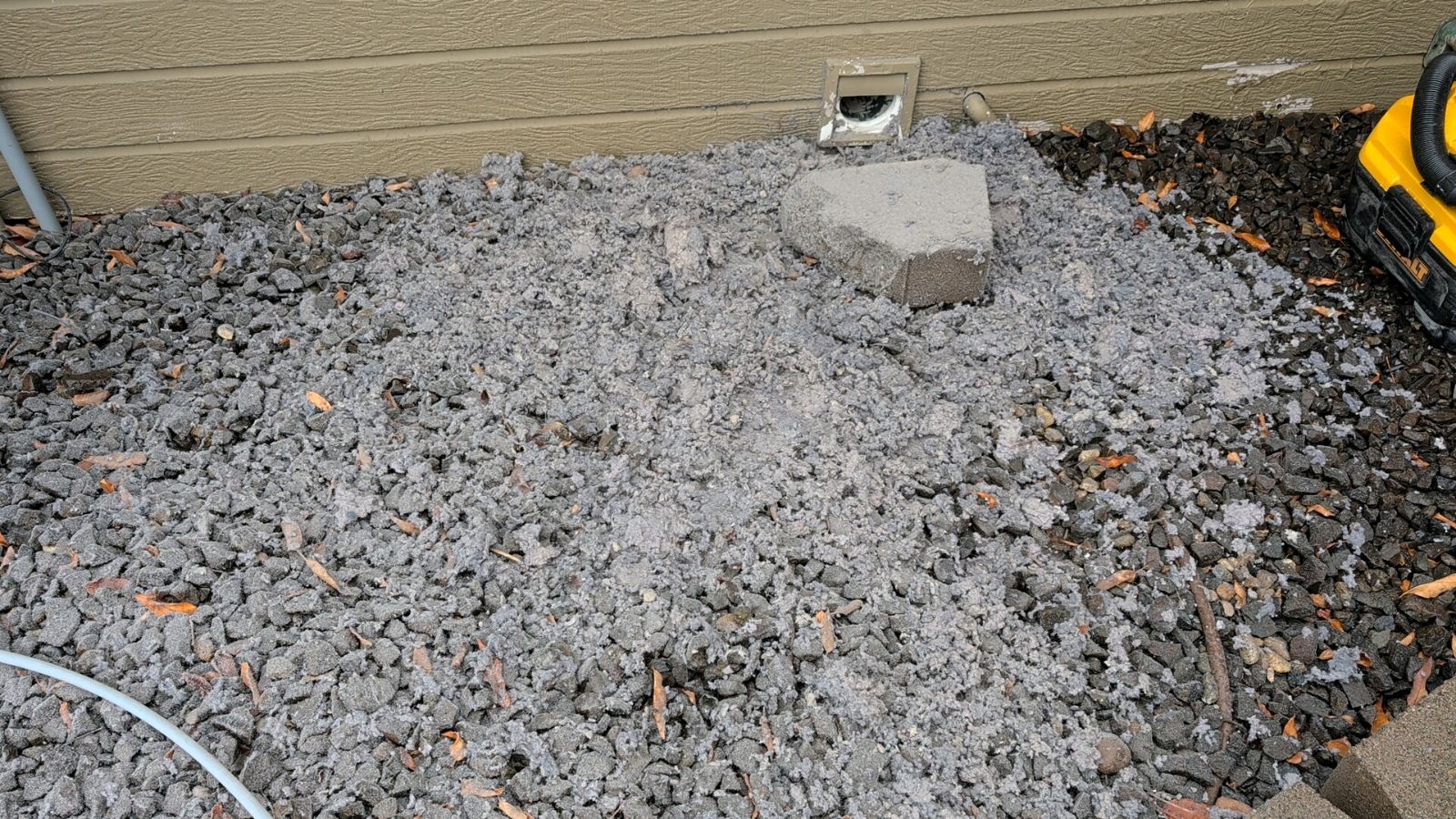
You see lint around the outside vent opening or behind the dryer. That lint is escaping because the vent cannot carry it out properly.
What causes the vent to clog
Lint gets past the lint screen on every load. Over months and years it collects along the inside of the duct, especially at bends and joints.
Long vent runs and lots of turns make the problem worse. Every bend slows the airflow and gives lint a place to settle. Homes with laundry rooms in the middle of the house or on a second floor often have long runs that clog faster.
Flexible foil or plastic ducts behind the dryer can get crushed or kinked when the dryer is pushed back against the wall. A crushed duct restricts airflow even when it is not full of lint.
Outside, birds and rodents sometimes nest in vent openings, and screens over the vent cap can trap lint and block the exit.
What you can check yourself
Clean the lint screen before or after every load. It sounds obvious, but it is the easiest way to slow down buildup in the vent.
Pull the dryer away from the wall and look at the duct behind it. Make sure it is not crushed, kinked or disconnected. If it is the thin, accordion style foil or plastic type, consider having it replaced with a more rigid duct.
Go outside while the dryer is running and check the vent cap. The flap should open and you should feel strong, warm airflow. If the airflow is weak, or the flap is stuck or packed with lint, the vent likely needs attention.
Unplug the dryer before you move it or disconnect anything, and if it is a gas dryer, be careful not to damage or loosen the gas line.
When to call for a dryer vent cleaning
If you have cleaned the lint screen, checked the duct behind the dryer, and your clothes are still taking too long to dry, the blockage is probably somewhere inside the wall, ceiling or roof run where you cannot reach it. A professional dryer vent cleaning clears the full length of the duct, from the dryer to the outside termination.
It is also worth having the vent looked at if the run is long, has several turns, or exits through the roof, because those vents clog more easily and are harder to inspect. In some homes the better fix is to repair or reroute the vent so it is shorter and straighter.
A clear vent helps your dryer do its job in one cycle, cuts down on wear and tear, and removes built up lint that should not be sitting in your walls.
Written by the team at Two Guys Energy Solutions — serving homeowners from our Treasure Valley and Northern Kentucky / Cincinnati branches.
Request a Free Estimate